NASA and GE Aerospace are joining forces for an extraordinary partnership aimed at advancing the aviation industry’s understanding of contrails and their impact on the climate. Contrails, the icy clouds formed by aircraft flying through cold, humid air, are estimated to contribute to climate warming, despite not being direct CO2 emissions. This partnership is more than just a collaboration—it’s a step toward a more sustainable future for aviation.
The Contrail Optical Depth Experiment (CODEX), set to take place in November, will involve cutting-edge technologies such as NASA’s Light Detection and Ranging (LiDAR) system to study contrails in unprecedented detail. This research promises to unlock new insights into contrail behavior, enabling the development of innovative technologies to mitigate their environmental impact. Let’s explore how this partnership is shaping the future of sustainable aviation.

Innovation takes flight when collaboration meets purpose. Together, NASA and GE Aerospace are shaping a sustainable future for aviation.
Breaking New Ground with CODEX Flight Tests
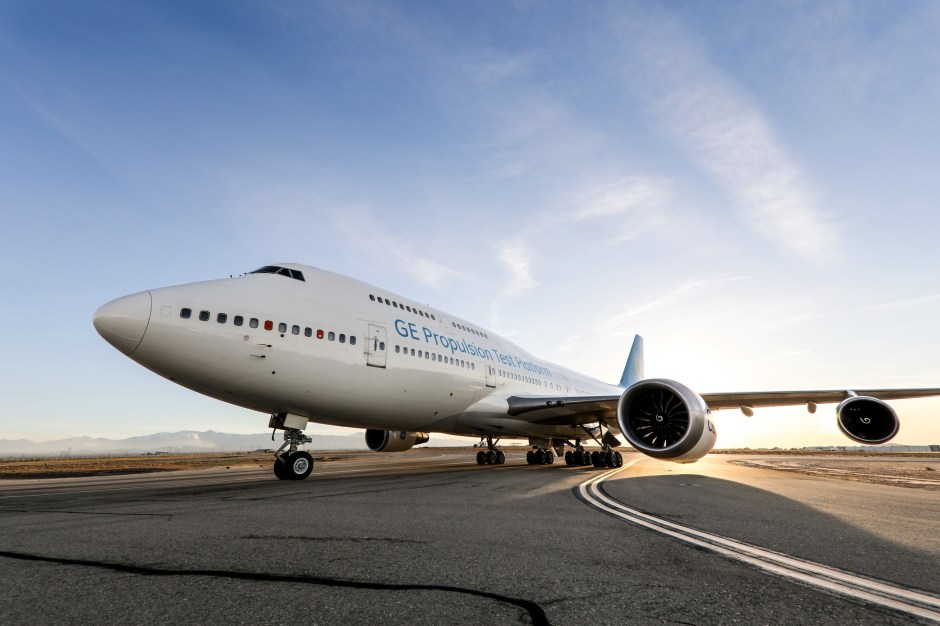
The CODEX initiative is a groundbreaking step in aviation research. Scheduled for the week of November 18, it involves NASA Langley Research Center’s G-III aircraft flying in tandem with GE Aerospace’s 747 Flying Test Bed. The goal? To map contrail formation using advanced LiDAR technology, creating detailed 3D imaging of contrails and studying their behavior over time.
Here’s why CODEX is so significant:
- Enhanced Contrail Science: The project will deepen our understanding of contrail formation, persistence, and their climatic effects.
- Cutting-Edge Technology: LiDAR offers a revolutionary way to visualize contrails, paving the way for next-generation forecasting and management tools.
- Global Collaboration: NASA is teaming up with the German Aerospace Center (DLR) and SATAVIA for precise weather forecasting to guide flight tests into contrail-forming regions.
By advancing contrail research, CODEX is laying the groundwork for new technologies that could significantly reduce aviation’s non-CO2 emissions.
A Legacy of Innovation: GE Aerospace and NASA Partnership
This isn’t the first time GE Aerospace and NASA have collaborated. Their partnership spans over 50 years and has consistently pushed the boundaries of aviation technology. From hybrid electric engines to sustainable aviation fuel compatibility, their joint efforts have revolutionized the industry.
Key highlights of their ongoing collaboration include:
- Hybrid Electric Engine Development: Exploring new propulsion systems to reduce emissions.
- Compact Core Compressor and Combustor Technologies: Innovations to improve efficiency and minimize environmental impact.
- Fuels and Emissions Testing: Researching cleaner energy solutions for aviation.
As Dr. Rich Wahls of NASA’s Sustainable Flight National Partnership notes, this collaboration is vital for balancing climate considerations with economic feasibility in aviation advancements.
CFM RISE Program: Shaping the Future of Aviation
At the heart of GE Aerospace’s sustainability efforts is the CFM Revolutionary Innovation for Sustainable Engines (RISE) program. Launched in 2021, RISE is one of the industry’s most ambitious initiatives, with over 250 tests already completed.
The program’s highlights include:
- Open Fan and Hybrid Electric Systems: Pioneering engine designs compatible with 100% Sustainable Aviation Fuel (SAF).
- Improved Efficiency: Aiming for over 20% better fuel efficiency and lower CO2 emissions than today’s most advanced engines.
- Non-CO2 Emission Goals: Meeting stringent standards for noise and non-CO2 emissions.
These innovations are set to revolutionize the aviation industry, offering a cleaner, greener future for air travel.
Final Thoughts: A Flight Path to Sustainability
The collaboration between NASA and GE Aerospace represents a bold vision for the future of aviation. Through cutting-edge research, groundbreaking technologies, and a relentless focus on sustainability, they are addressing one of the industry’s most pressing challenges—environmental impact.
From the CODEX contrail tests to the revolutionary advancements of the RISE program, these efforts highlight the power of innovation in creating a more sustainable world. The skies may be the limit for now, but with NASA and GE Aerospace at the helm, the future of flight looks brighter and greener than ever.


You must be logged in to post a comment.